Many Citrus Heights homes sit on concrete slabs with supply lines running beneath them. A slab leak can warm a floor spot, raise the water bill and, if ignored, undermine flooring and the slab itself.
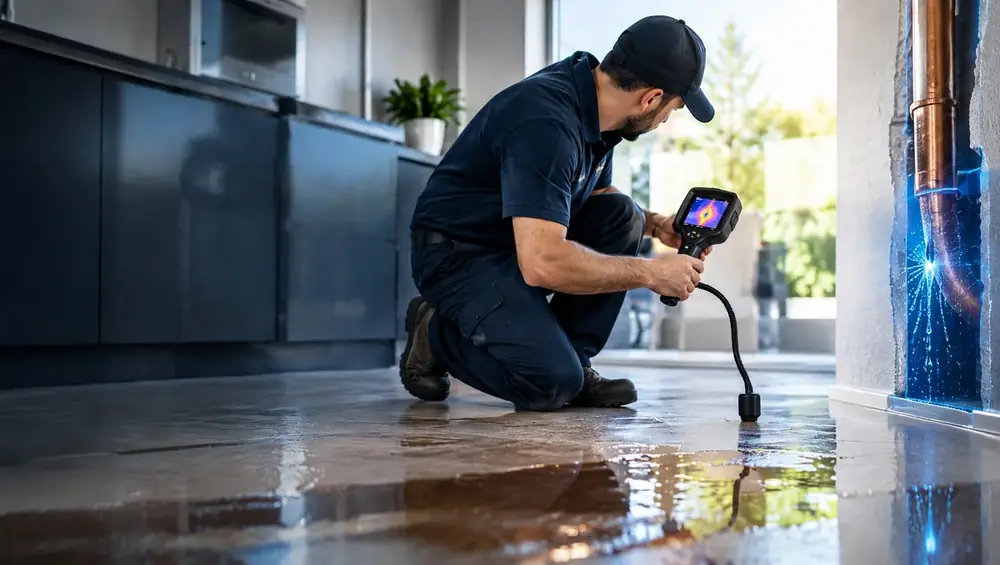
Signs you may need slab leak detection
- Warm or hot spots on the floor
- Sound of running water under the slab
- Cracks, lifted tile or wet carpet along the floor
- Low water pressure with no clear cause
How we find the leak
We isolate the pressurized lines, trace the sound and heat signature of the leak through the slab, and mark the position so any repair can be limited to a small area.
See the full overview in how leak detection works.
What affects the cost
Cost reflects the size of the slab, how many lines run beneath it, and flooring type above.
Where we provide it
We provide slab leak detection throughout Citrus Heights, including these neighborhoods:
- Birdcage Heights
- Sylvan Old Auburn Road
- Sunrise Ranch
- Stock Ranch
- Northwest Citrus Heights
- Cirby Ranch
- Chase
- Arcade Creek
- Park Oaks
- Sunrise Oaks
Repair options: reroute vs digging through the slab
Finding the leak is only half the job. The repair that follows usually goes one of three ways:
- Spot repair through the slab. We jackhammer a small section at the marked point and fix the pipe. Smallest repair bill, but you cut concrete and flooring, and other sections of the same old line can fail later.
- Reroute. The leaking line under the slab is capped off and a new line runs through walls or the ceiling to the same fixture. Nothing gets jackhammered. This is the most common choice when the pipe under the slab is aging and likely to leak again elsewhere.
- Full repipe. Replace the home's water lines. Makes sense when leaks keep returning, or in homes with galvanized (pre-1980s) or polybutylene (1978–1995) piping that is past its reliable life.
We locate the leak first, then explain which option fits what we found. The full comparison is in our guide: can a slab leak be fixed without breaking the floor? Call us for typical repair price ranges for your situation.
Why Citrus Heights homes see so many slab leaks
The median Citrus Heights home was built around 1977, and most sit on concrete slabs with copper supply lines cast right into the concrete. After 40–50 years, that copper develops pinhole leaks from corrosion, and the concrete itself can abrade the pipe as the home shifts. Fiddyment soils here swell when wet and shrink when dry, and that seasonal movement stresses rigid pipe under the slab. Galvanized lines from the pre-1980s era corrode from the inside out; polybutylene lines installed between 1978 and 1995 are known to fail without warning. This is why slab leaks are the number one leak complaint in Citrus Heights.
Pipe material tells part of the story. Copper piping under slabs wears thin from the inside, and older galvanized lines rust through. Newer homes may run PEX piping or PVC piping, which handle hard water better but can still fail at fittings. A failed pressure regulator can also push pressure high enough to stress joints. So what causes a slab leak here? Old pipes, hard water, and soil that shifts with the seasons. One more reason a pressure check comes first.
Frequently asked questions
What causes a slab leak?
Pipe corrosion, shifting soil, abrasion against concrete, and high water pressure can all wear through supply lines under a slab.
Can a slab leak be found without breaking concrete?
Yes. Acoustic and thermal methods usually locate it before any concrete is opened for repair.
How long can a slab leak go undetected?
Months. A small leak under the slab may only show up as a slowly rising water bill or a warm patch on the floor. Citrus Heights homes on 1970s slabs are especially prone to this slow pattern, so an unexplained bill increase is worth investigating.
Can you fix a slab leak without digging?
Often yes, with a reroute: the leaking line is capped off and a new line runs through walls or the ceiling instead. See our guide on slab leak repair without breaking the floor.
How long does slab leak repair take?
A detection visit is usually a few hours. A reroute or spot repair is typically a one- to two-day job; a full repipe takes several days depending on home size.
What should I do if my slab is leaking?
Shut off water at the fixture or main if it is safe to do so, note the symptoms (warm spots, sounds, bill changes), and call. Don't ignore it. Water under the slab damages flooring and the foundation over time.
What does a slab leak look like from above?
Warm or hot spots on the floor, cracked or lifted tile, damp carpet along walls, mildew at baseboards, or the sound of running water when everything is off.
Can I have a slab leak and not know it?
Yes, easily. Most start small and announce themselves only through the water bill. A meter test at the curb is the fastest way to confirm one.
Is a slab leak an emergency?
It becomes one fast if water is actively damaging floors or the foundation, or if the meter is spinning hard. A slow, small leak is still urgent. Call and describe what you see.
Think you have a leak?
Call AquaTrace Leak Detection to describe what you are seeing in Citrus Heights and get a plan to find it.
Call (123) 456-7890Related services
- Water Leak Detection
- Pool and Spa Leak Detection
- Sewer and Drain Line Leak Detection
- Water Main and Service Line Leak Detection
- Irrigation and Sprinkler Leak Detection
- Commercial Leak Detection
- High Water Bill Leak Investigation
Last updated: October 25, 2026.