Finding a leak you cannot see is a process of elimination. We confirm a leak exists, narrow down the part of the system, and then pinpoint it.
1. Meter and isolation tests
With all fixtures off, a moving meter means water is escaping. Isolating zones shows whether the leak is on the supply line, inside the house, or in irrigation.
2. Pressure testing
Holding pressure on a section of pipe shows whether it is sealed. This is how pool lines and slab lines are separated from the rest of the system.
3. Acoustic listening
Ground and surface microphones pick up the sound of leaking water so we can trace it to its loudest point.
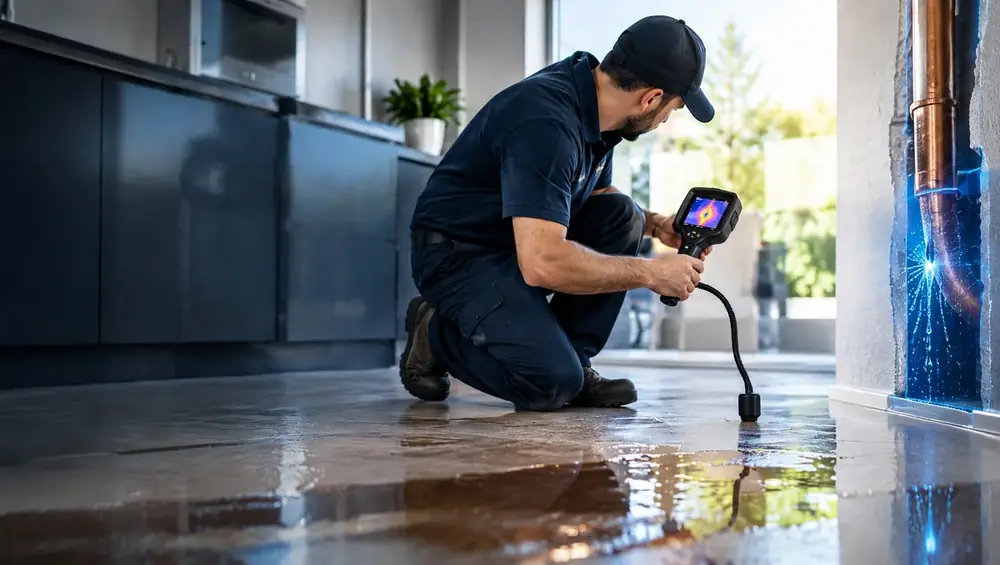
4. Thermal imaging and moisture mapping
Infrared cameras and moisture meters show where walls, ceilings and floors are wetter or at different temperatures than their surroundings.
5. Camera inspection
A camera run through drain and sewer lines shows cracks, root intrusion and breaks without digging.
Match the method to your situation on our services page.
Tracer gas detection
When a line can't be pressurized with water for testing, we fill it with a harmless tracer gas. A mix that rises through soil and concrete. A sensitive sniffer above the surface follows the gas to the exact leak point. It is especially good for finding small leaks under slabs and driveways where acoustic listening alone isn't conclusive.
Correlator loggers
Two sensors clamp onto the pipe at different access points. Hose bibs, meters, valves. They listen for the leak's sound and compare when the sound reaches each sensor. The time difference places the leak at a measured distance along the pipe. Good for long service lines between the meter and the house.
Ground-penetrating radar (GPR)
GPR sends radar pulses into the ground and reads the reflections. It maps buried pipes and voids so we know where to test. Useful when there are no plans of the underground plumbing, which is common in older Citrus Heights homes.
Sewer camera inspection
A camera on a reel travels the sewer line and shows cracks, offsets, root intrusion and bellies on a monitor. It tells us exactly where the problem is and how bad it is before any digging is discussed.
Other methods in the kit
Some jobs need a different tool. Tracer gas leak detection uses a hydrogen tracer gas test to find a slow leak that makes no sound: we fill the line with a light gas mix and a sniffer picks up where it escapes. Ultrasound and a sonic listening device help on low-flow leaks that a ground microphone misses. An electromagnetic locator and utility locating gear trace the line route before we mark anything, and a dual frequency locator can tell a water line apart from other buried lines. For sewer lines, video pipe inspection and smoke testing show breaks and bad joints without digging. Line tracing marks the pipe path across the yard so the dig, if one is needed, lands in the right spot. A pressure isolation test confirms which section loses pressure, and ground penetrating radar maps what sits under the slab. All of these are nondestructive testing methods. The pipe and the floor stay intact while we work. The approach stays diagnostic-first: test, locate, then report. That is what non-invasive leak detection means here, and a good leak locator earns the name by pinpointing first. In short, this is how to find a water leak without tearing up the house.
Choosing the right tool
No single instrument wins every job. The method follows the evidence: meter behavior and pressure tests tell us which system is leaking, then acoustic, thermal, gas or camera work pins the exact point. See the homeowner version in our guide: how plumbers find hidden water leaks.
Frequently asked questions
What is acoustic leak detection?
It uses sensitive microphones to hear the sound pressurized water makes as it escapes a pipe.
Is thermal imaging enough to find a leak?
It shows temperature patterns, so it helps narrow an area, but we confirm with other methods.
Which leak detection tool is best?
There is no single best tool. It depends on the leak. Acoustic listening finds pressurized leaks, thermal finds hot lines under slabs, tracer gas finds small underground leaks, and cameras inspect sewers. A good visit uses the combination the evidence calls for.
Think you have a leak?
Call AquaTrace Leak Detection to describe what you are seeing in Citrus Heights and get a plan to find it.
Call (123) 456-7890Last updated: October 25, 2026.